
How Much Do Commercial Divers Make? Full Breakdown by Industry
What the Paycheck Really Looks Like Below the Surface
Commercial diver wages depend on a range of factors, from where you work to what certifications you carry. Here is a full look at what commercial divers earn across the United States and what drives those numbers up or down.
At a Glance:
- The Bureau of Labor Statistics reports a median annual wage of $67,570 for commercial divers (BLS, May 2023 data).
- The lowest 10 percent of earners made less than $41,470, while the top 10 percent earned more than $103,940.
- Saturation divers working on offshore platforms and deep-water projects can earn well into six figures annually.
- Underwater welders and hazmat divers command higher wages due to the specialized skills and added risk.
- Location, certifications, experience, and industry all play a direct role in determining a commercial diver’s wage.
- The BLS projects employment for commercial divers to grow 5 percent from 2022 to 2032, faster than average for all occupations.
Commercial diving combines demanding physical work with technical skill, and the compensation reflects that. This page breaks down what commercial divers actually earn, which roles pay the most, and what you can do to position yourself for a higher salary in the industry.
How Much Do Commercial Divers Make on Average?
According to the U.S. Bureau of Labor Statistics, commercial divers in the United States earned a median annual wage of $67,570 as of May 2023 (BLS, Occupational Employment and Wage Statistics, SOC 49-9092). That median figure means half of all commercial divers earned more and half earned less.
But that number only tells part of the story. The wage range for commercial diving jobs is broad:
- Bottom 10 percent: Less than $41,470 per year
- Top 10 percent: More than $103,940 per year
One important caveat: BLS data groups all commercial divers under a single occupation code, which includes non-certified SCUBA divers working marina jobs and small-vessel maintenance alongside certified commercial divers performing construction, inspection, and saturation work. That mix pulls the median and the bottom of the range down. Certified commercial divers working for ADCI-member contractors typically earn well above the BLS median, especially once they move beyond entry-level roles.
That spread exists because commercial diving is not a single job. It is an entire career path with roles that range from entry-level tending to deep-water saturation diving, each with its own pay scale and level of demand.
Wages by Role in Commercial Diving
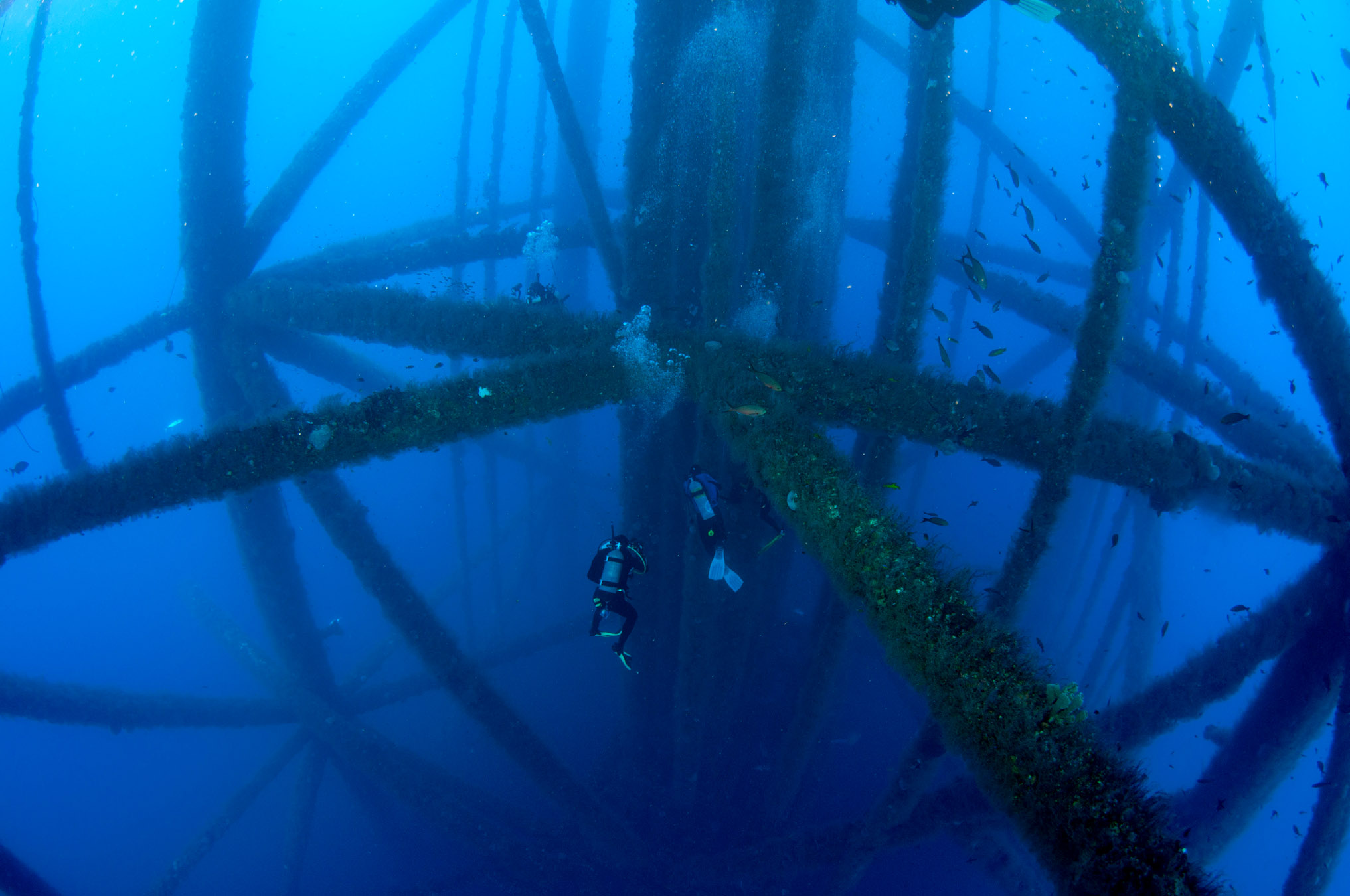
Your role, your certifications, and the environment you work in all affect your take-home pay. The figures below reflect average base salaries reported through job posting data, but total compensation in commercial diving often includes overtime, per diem allowances, day rates, and rotation bonuses that can push actual earnings well above base salary averages.
| Role | Avg. Base Salary | Typical Range | Notes |
|---|---|---|---|
| Inland Diver | ~$49,500 | $40,000–$53,000 | Avg. pulled down by non-certified SCUBA divers in data; certified divers earn higher |
| Dive Tender | ~$66,100 | $47,500–$77,500 | Average skews high due to combined tender/diver postings |
| Offshore Diver | ~$44,400 base | $39,500–$48,000 base | Total comp often $80,000+ with day rates and OT |
| Underwater Welder | $50,000–$90,000 | Varies by setting | Offshore and deep-sea projects push to top of range |
| Hazmat Diver | ~$108,000 | $81,500–$130,000 | Nuclear specialization is highest-paid hazmat niche |
| Saturation Diver | ~$117,000 | $102,500–$164,000+ | Day rates of $1,300–$1,500+; peak-season earnings can exceed $200,000 |
Inland Diver
Inland divers perform underwater construction, inspection, and maintenance on bridges, dams, water treatment plants, power plants, and other infrastructure. This work often involves nondestructive testing and civil engineering support. The average annual base pay for an inland commercial diver is around $49,577, with most salaries falling between $40,000 and $53,000. That average is pulled down by the inclusion of non-certified SCUBA divers working marina jobs and small-vessel maintenance, lower-skill work that shares the same job category in salary databases but bears little resemblance to certified commercial diving.
Inland divers with ADCI certification and additional credentials in NDT or underwater welding often earn toward the higher end of the range or beyond, and many inland positions offer more consistent year-round scheduling than offshore work and likely a better work/life balance.
Dive Tender
Every commercial diver starts somewhere, and for most, that starting point is the role of dive tender. A tender works on the surface, supporting the diver below by managing the umbilical, handling equipment, and maintaining safety systems. This is hands-on, physically demanding work that builds the foundation for a diving career. The average annual pay for a dive tender in the United States is around $66,145, with most salaries falling between $47,500 and $77,500. That average skews higher because many job postings combine the tender and diver role into a single position, especially at smaller dive companies where tenders rotate into the water regularly.
Tenders who demonstrate strong topside skills and reliability move into lead tender roles, managing other tenders on the dive spread and taking on more responsibility for dive operations. Lead tenders typically earn toward the upper end of the tender pay range and are often next in line for diver rotations.
Offshore Diver
Offshore diving is where many commercial divers see a serious jump in earnings. Offshore divers work on platforms and subsea pipelines in the Gulf of Mexico and other offshore environments. The combination of remote locations, physically demanding conditions, and extended rotations drives compensation higher. Experienced offshore divers regularly earn well above $80,000 annually, and those in supervisory or lead diver roles push past six figures.
The average base salary listed in job postings is around $44,373, but that figure captures base pay alone and does not reflect the full picture. Once day rates, overtime, depth pay, and rotation bonuses are factored in, total compensation is typically much higher.
Underwater Welder
An underwater welder/burner brings a specialized and high-demand skill set to the job site. These divers perform wet welding and cutting on submerged structures, ships, and pipelines. Because underwater welding requires advanced commercial diver certification on top of welding qualifications, it commands a higher salary. The average salary for underwater welders in the U.S. typically ranges from $50,000 to $90,000 annually. Entry-level welders may start around $50,000, while experienced welders with five to ten years in the field often surpass $80,000. Those working offshore or on deep-sea projects can earn even more.
Hazmat Diver
Hazmat divers work in contaminated underwater environments, including chemical plants, nuclear power plants, and water treatment facilities. The additional training, safety protocols, and personal risk involved in handling hazardous materials translate to a meaningful pay premium. The average annual pay for a nuclear diver, one of the most common hazmat diving specializations, is around $107,964, with most salaries falling between $81,500 and $130,000. Top earners in this field can make upward of $152,500 per year.
Saturation Diver
Saturation diving sits at the top of the commercial diving pay scale. Saturation divers live in a pressurized diving bell and habitat for weeks at a time, performing deep-water work on platforms and subsea infrastructure. The work involves extended exposure to high-pressure underwater environments, complex decompression procedures, and serious physical and mental demands. The average annual pay for saturation diving roles is around $117,261, with most salaries falling between $102,500 and $117,000. Top earners can reach $164,000 or more per year.
Divers working peak-season offshore projects with day rates of $1,300 to $1,500 or more per day and depth bonuses can push annual earnings well beyond those averages, and it is not uncommon for experienced saturation divers to exceed $200,000 in high-demand years.
What Factors Influence Commercial Diver Wages?
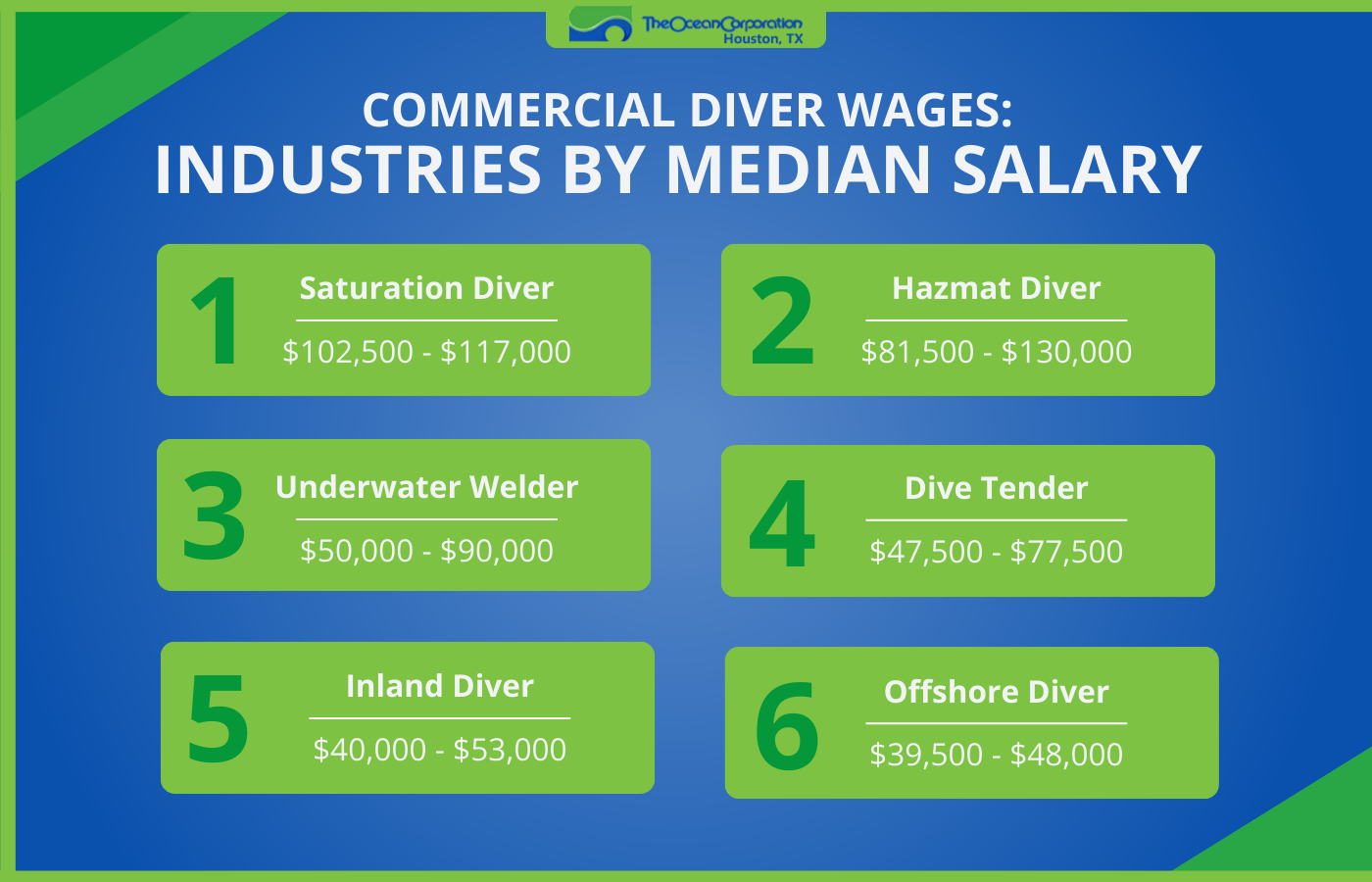
Several factors can push a commercial diver’s wage higher or keep it on the lower end of the spectrum.
- Experience and dive log hours. Like any skilled trade, time on the job matters. A diver with five or more years of experience and a well-documented dive log will have access to better-paying projects and supervisory roles.
- Certifications. Holding recognized certifications from organizations like ADCI (Association of Diving Contractors International) and IMCA (International Marine Contractors Association) directly impacts employability and pay. An advanced commercial diver certification, or specialized credentials in underwater welding and nondestructive testing, can open doors to the highest-paying positions. The Ocean Corporation is the only institution in the United States authorized to issue IMCA international diving certifications, which carry weight with employers worldwide.
- Location. Commercial diver wages vary by region. States with high demand for offshore diving, such as Louisiana and Texas along the Gulf Coast, tend to offer more opportunities and competitive pay. The Gulf of Mexico accounts for the vast majority of U.S. offshore oil production, and that infrastructure needs divers to build, inspect, and maintain it.
- Industry. Oil and gas tends to offer the highest wages in the commercial diving industry. But divers also find steady work in civil engineering, salvage operations, marine construction, scientific research, and the medical community supporting hyperbaric medicine. Each of these industries has its own pay structure and seasonal patterns.
- Willingness to travel. Commercial divers who are willing to relocate or work on rotation schedules, particularly for offshore work, often have access to projects with higher day rates and more consistent employment.
Is Commercial Diving a Good Career Investment?
The numbers suggest it is. With a median wage well above the national average for all occupations and a projected growth rate that outpaces many other trades, commercial diving offers a strong career path for those willing to put in the work. The training timeline is measured in months (30 weeks at The Ocean Corporation) compared to the four or more years a traditional degree requires.
The Georgetown University Center on Education and the Workforce ranked The Ocean Corporation 9th nationwide for 10-year earnings return on investment in a study of over 4,500 U.S. colleges and institutions. That kind of financial outcome is worth paying attention to, especially for anyone weighing their options after high school or considering a career change.
I make more or just as much as a person that went the four-year degree path. Going to vocational school didn’t limit me financially.
Jake Kelley, Project Coordinator, White Fleet
How to Start Your Commercial Diving Career
If these numbers have your attention, the next step is training. The Ocean Corporation has been training people for careers in commercial diving and nondestructive testing since 1969. The 30-week Ultimate Diver Training (UDT) program covers everything from rigging and diving physics to underwater welding, mixed-gas diving, and bell and saturation diving procedures. Graduates earn ADCI and IMCA certifications recognized by employers across the United States and around the world. The Ocean Corporation is the only U.S. institution authorized to issue IMCA international diving certifications.
You do not need prior diving experience to enroll. If you are 18 or older with a high school diploma or GED, you meet the enrollment requirements. Ocean Corp’s career services team works with graduates for life, not just at graduation, to connect them with employers in the commercial diving industry.
Ready to learn more? Talk to an admissions advisor or explore upcoming start dates to see how the program fits your timeline.
I have financial independence. I don’t owe any money. I own a house. I own vehicles. My kids go to school. Wife’s happy. Money in the bank. Retirement.
Jake Kelley, Project Coordinator, White Fleet
Frequently Asked Questions
How much do commercial divers make a year?
According to the U.S. Bureau of Labor Statistics, commercial divers earned a median annual wage of $67,570 as of May 2023. The lowest 10 percent earned less than $41,470, while the top 10 percent earned more than $103,940. Those BLS figures include non-certified SCUBA divers in the same occupation code, which pulls the median lower than what certified commercial divers typically earn. Specialized roles like saturation diving and underwater welding can push annual earnings well beyond those figures.
What type of commercial diver makes the most money?
Saturation divers consistently earn the highest wages in the industry. Average annual pay is around $117,000, with top earners exceeding $164,000. During peak-demand seasons, experienced saturation divers working day rates of $1,300 to $1,500 or more can push annual earnings past $200,000. Underwater welders and hazmat divers also earn above-average wages due to the added skill requirements and risk involved.
Do you need a college degree to become a commercial diver?
No. Commercial diving is a skilled trade. Most divers enter the field through hands-on training programs like the 30-week Ultimate Diver Training program at The Ocean Corporation. Enrollment requires applicants to be 18 or older with a high school diploma or GED.
What certifications do commercial divers need?
Most employers require certification from the Association of Diving Contractors International (ADCI). For international work, an IMCA (International Marine Contractors Association) certification is often expected. Additional credentials in underwater welding, non-destructive testing (NDT), and hazardous materials handling (HAZWOPER) can open doors to higher-paying positions. The Ocean Corporation is the only U.S. institution authorized to issue IMCA international diving certifications.
Where do most commercial divers work?
The Gulf Coast, particularly Louisiana and Texas, is the largest hub for commercial diving employment in the United States due to the concentration of offshore oil and gas operations. Commercial divers also work on bridges, dams, power plants, and water treatment facilities across the country. Divers willing to travel or work on rotation schedules typically have access to more opportunities and higher pay.
About The Ocean Corporation
The Ocean Corporation has been training commercial divers and NDT technicians since 1969. Our graduates go on to work in offshore energy, ship repair, maritime infrastructure, aerospace, and other industries that depend on skilled diving and inspection professionals. We are the only institution in the United States authorized to issue IMCA international diving certifications, and our career services team supports graduates for life.
Qualified students may be eligible for GI Bill benefits, Title IV federal financial aid, and state grant programs. Our campus is located in Houston, Texas, at the center of the Gulf Coast’s industrial corridor.
Compliance Note
Earnings vary based on employer, location, qualifications, and project type. Program length, curriculum, and outcomes are subject to change. Career placement services are available to support graduates in their job search but do not guarantee employment or a specific salary.


Trackbacks & Pingbacks
[…] Offshore work is usually priced by the day rather than by salary. Day rates on peak-season offshore projects run $1,300 to $1,500 and up before depth bonuses, and a diver who strings together enough project days in a strong year can clear $200,000, according to Ocean Corp’s wage breakdown. […]
Comments are closed.