Course Starts
New classes begin every five (5) weeks.

An advanced diving course takes a working commercial diver beyond surface-supplied air operations and into the deeper, more technical side of the trade. At The Ocean Corporation, the advanced course covers mixed-gas operations, bell and saturation diving systems, and underwater welding and cutting. These are the skill sets that move a diver from entry-level work into the offshore, deep-water, and industrial projects at the upper end of the commercial diving pay scale.
An advanced course in commercial diving is built on top of foundational scuba skills and surface-supplied diving fundamentals: dive physics, decompression theory, rigging, equipment maintenance, and underwater work practices. From that base, an advanced diver learns to operate at greater depths, manage longer bottom times, and complete specialized tasks that conventional air diving cannot support.
New classes begin every five (5) weeks.
Classes meet Monday through Friday for five hours a day: 7:30 am to 12:30 pm, 1:00 pm to 6:00 pm, or 6:00 pm to 11:00 pm.
Advanced diving training is included as part of The Ocean Corporation’s 30-week Commercial Diver Certification program. Coursework moves a student from classroom theory to pool session work in our dive tanks, then out to open water dive operations as the program progresses. The program is built as a full education course, not a short-format workshop, so a student leaves with the depth of training employers expect.
I would say that it’s probably the most substantial foothold, with respect to my education, that propelled me to where I am today. The bulk of the senior management team at US Underwater are Ocean Corp graduates.
The skills that I got here were invaluable to me when I got to work, either offshore, inland, or at NASA. I’m helping train folks that are going to be the first people to set foot on Mars. Getting that kind of excitement is great.
You guys care about your graduates, and that’s important.

As a business owner, my main place to get employees, get divers and tenders, and even other services… I reach out to the school just because of the network that they have.
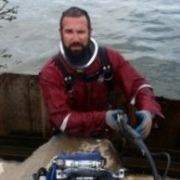
Everything that I’ve learned and know and have gotten from the Ocean Corporation has been instrumental in my success. The teachers, the staff, the cadre, the upper echelon—they all are here willing to help.
The commercial diving industry runs on depth and complexity. The work that pays the most and carries the most responsibility happens beyond the limits of standard surface-supplied air. Mixed-gas operations open up deeper job sites. Saturation diving lets crews live at depth and complete projects that would be impossible with bounce dives. Underwater welding and cutting puts a diver on the short list for offshore platform repair, pipeline work, ship husbandry, and salvage operations.
For divers who want to work on offshore oil and gas platforms, deepwater pipelines, subsea infrastructure, or major salvage projects, an advanced certification is the gateway. It also opens up new experiences a working diver could not access at the entry level: bell runs, saturation rotations, deep welding contracts, and international offshore work.
The Bureau of Labor Statistics reports commercial diving among the higher-paid skilled trades, with the deepest and most specialized offshore work at the upper end of that range. Advanced diving training is what positions a graduate to compete for those roles.
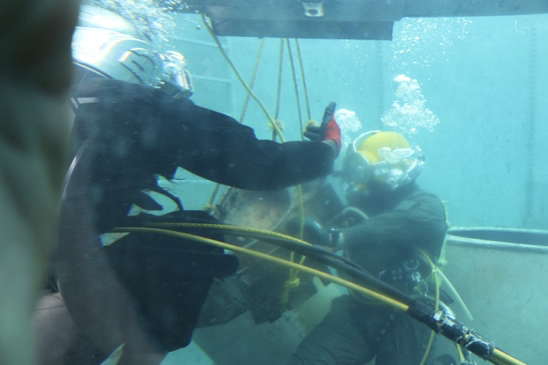
Gain knowledge of the deeper aspects of diving physics and medicine, with focus on mixed-gas use, decompression sickness prevention, and treatment. Mixed-gas diving extends the maximum depth a diver can work safely, opening up project sites that are out of reach for standard air diving. Coursework covers gas mixing principles, decompression schedule planning, in-water decompression procedures, and the physiological factors that drive every mixed-gas operation.


Master the U.S. Navy Standard Surface Air Decompression Tables and gain practical experience with decompression chambers.

Learn the protocols for handling decompression sickness, arterial gas embolism, lost diver scenarios, equipment failure, and recompression chamber operations. Hands-on training in our recompression chambers gives a diver real experience with treatment table operations.

Train in the underwater navigation skills that working divers depend on every day: compass headings, distance estimation, natural and visual landmarks, and pattern searches. A navigation dive in zero-visibility conditions is a different job from one with clear water and good light, and our program prepares a diver for both.
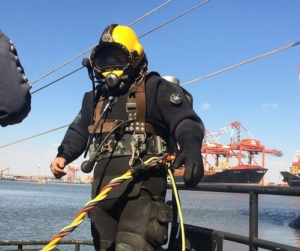
Inland industrial work, northern offshore contracts, and contaminated water jobs often call for a dry suit instead of standard wet exposure gear. Coursework covers dry suit setup, buoyancy control with a dry suit, gas management, and the maintenance practices that keep the suit working through long rotations.
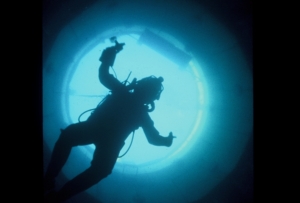
Commercial work does not stop when the sun goes down. Offshore platforms, ship husbandry, and emergency response operations regularly run night diving shifts. Training covers the equipment, procedures, and communication practices that keep night dives safe and productive.
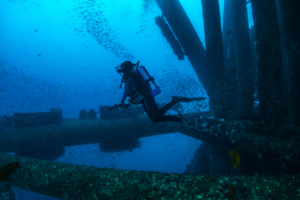
Study the physics, physiology, and decompression schedules that govern deep dive operations. Coursework covers nitrogen narcosis, oxygen toxicity limits, in-water decompression, surface decompression with oxygen, and the use of dive computer-based and table-based schedules.
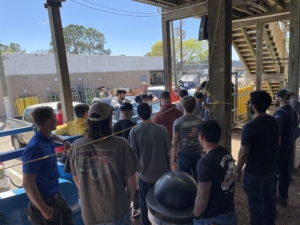
Train in the underwater rigging skills used to recover, position, and secure submerged objects. Lift bag operations, sling and shackle work, and load calculation are core to salvage, construction, and inspection work. Managing trim and stability under load is core to every rigging job.
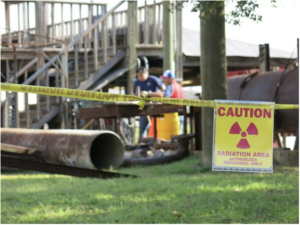
Learn the equipment, procedures, and decontamination practices required for diving in contaminated water environments. This work is in steady demand at industrial sites, water treatment facilities, and emergency response operations.
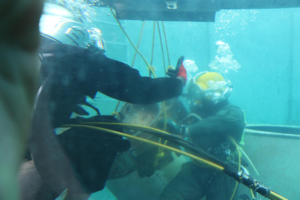
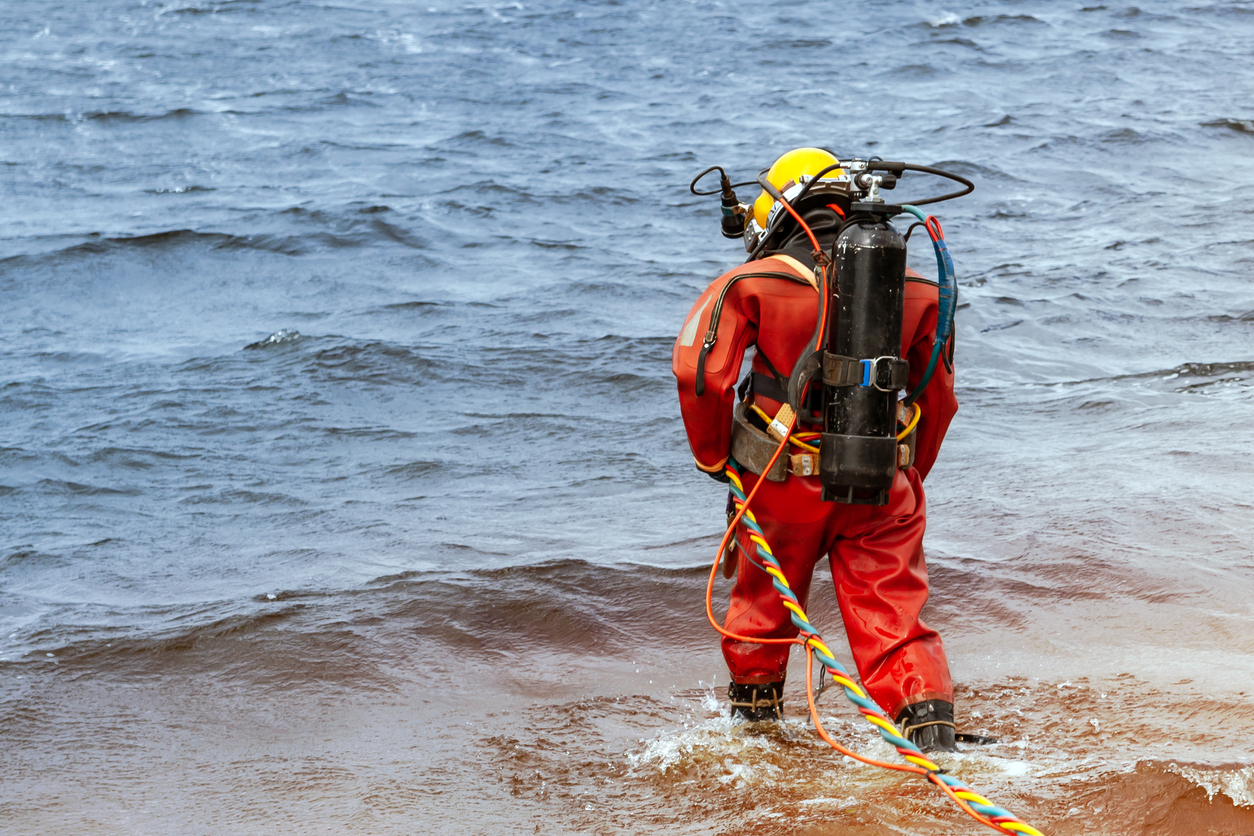
Learn the setup, operation, and maintenance of surface-supplied diving rigs, including the helmet systems used across the offshore and inland diving industry.
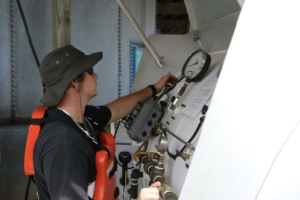
Train on the dive control panels, gas racks, and mixing equipment used to deliver air and breathing mixtures to working divers. Understanding these systems is the foundation for moving into supervisor and life support technician roles.
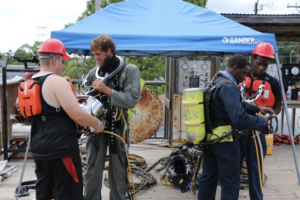
Operate and assist with the recompression chambers used for treatment dives and surface decompression. Chamber operations are a core part of the saturation diving workflow and a frequent first step into specialty roles for graduates.
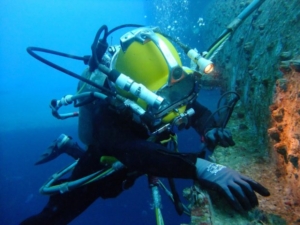
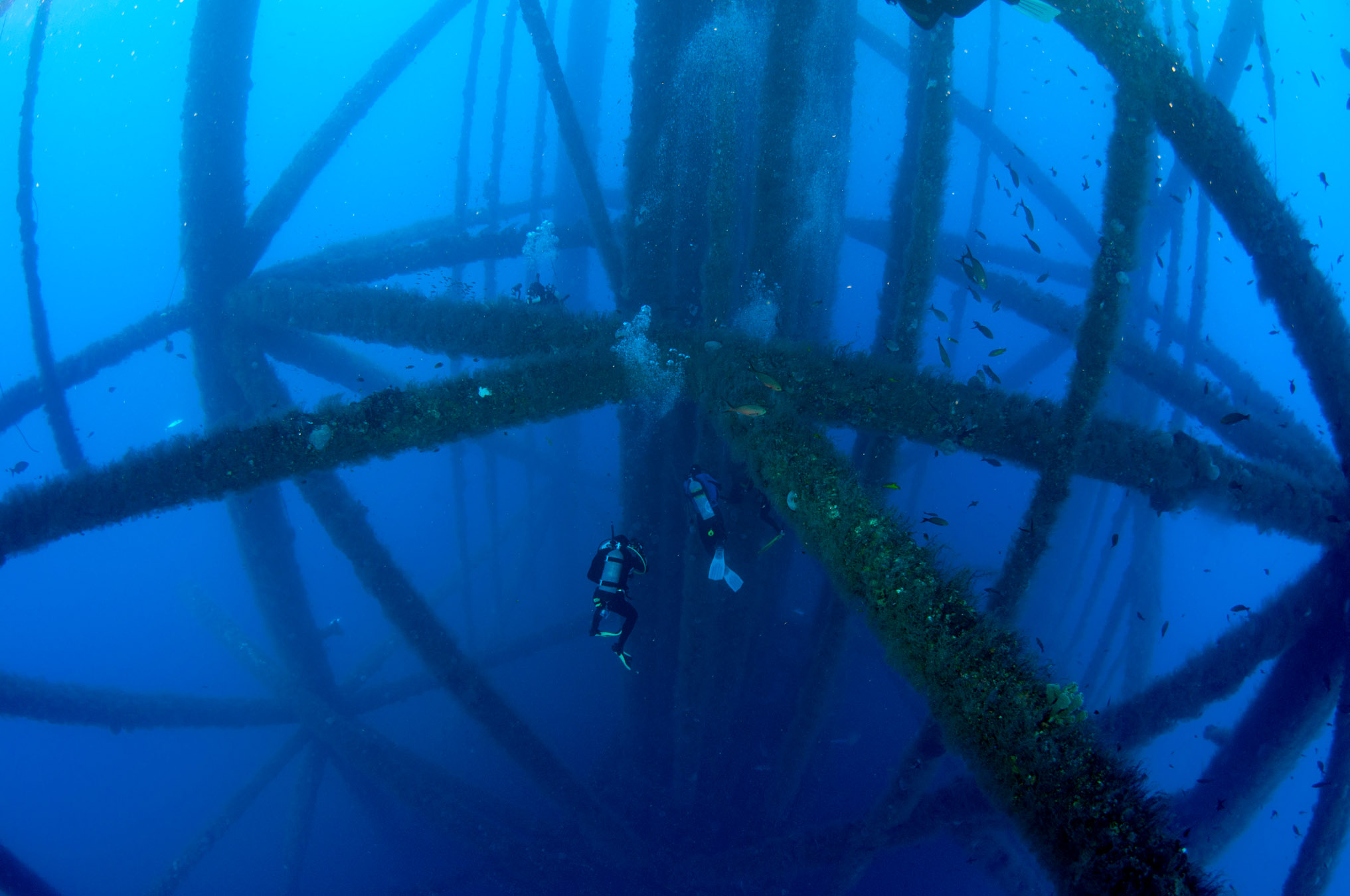
Get hands-on familiarity with the bell launch and recovery systems, transfer-under-pressure procedures, and saturation living chambers used on offshore projects.
Ranked Commercial Dive School in the Nation
Ranked by Georgetown University for graduate earnings and return on investment, The Ocean Corporation leads all U.S. diving schools.
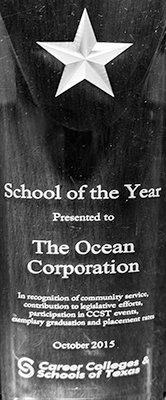
CCST School
of the Year
Recognized by the Career Colleges and Schools of Texas for outstanding educational outcomes, job placement, and student experience.
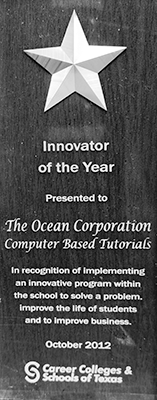
CCST Innovator
of the Year
Honored for pioneering advances in career training, including new technologies, curriculum innovation, and instructional design.
Ranked for ROI
among all US Colleges
In a nationwide Georgetown University study of over 4,500 institutions, Ocean Corp ranked #9 in return on investment.
Take the first step toward a better future.
Discover available grants, scholarships, loans, and flexible payment plans tailored to support your education.
Find step-by-step guidance on the application process, tools for estimating aid, and resources to answer any funding-related queries.
What is an advanced diving course?
An advanced diving course in commercial diving covers the skills and certifications a working diver needs to operate beyond standard surface-supplied air diving. At The Ocean Corporation, the advanced course covers mixed-gas operations, bell and saturation diving, and underwater welding and cutting. These are the credentials that move a diver into offshore, deepwater, and industrial work.
Is advanced diving the same as PADI Advanced Open Water?
No. PADI Advanced Open Water is a recreational scuba certification for an open water diver who wants to expand their recreational range. Advanced commercial diving training covers a different scope of work: mixed-gas systems, saturation diving, underwater welding, and the technical operations that support paid work on subsea infrastructure. The Ocean Corporation trains commercial divers, not recreational scuba divers.
Do I need to be a certified diver before enrolling?
No prior diving experience is required. The Ocean Corporation’s 30-week Commercial Diver Certification program builds a graduate from no diving background to a working commercial diver, with advanced certification training included as part of the program.
What advanced diving certifications will I earn?
Graduates earn the ADCI-aligned commercial diver certification employers expect at graduation, AWS D3.6M underwater welding certification, and training in mixed-gas and saturation diving operations. The IMCA diver certification card comes later, once a diver has logged qualifying dives with an IMCA contractor. The Ocean Corporation is the only authorized assessor and issuer of that card in the United States.
What jobs can an advanced diver work?
Advanced divers work on offshore oil and gas platforms, subsea pipeline projects, ship husbandry and salvage operations, inland industrial diving projects, and saturation diving contracts worldwide. Many graduates progress into supervisor, life support technician, and operations management roles.
How long does the program take?
The full Commercial Diver Certification program, which includes advanced diving training, takes 30 weeks. New classes start every five weeks.
How does The Ocean Corporation support job placement?
Lifetime career placement support is included for every graduate. Our career services team connects graduates with employers across the commercial diving industry, supports interview preparation and resume work, and stays available throughout the full length of a graduate’s career.