
What is a Sat Diver? A Guide to Life Beneath the Surface
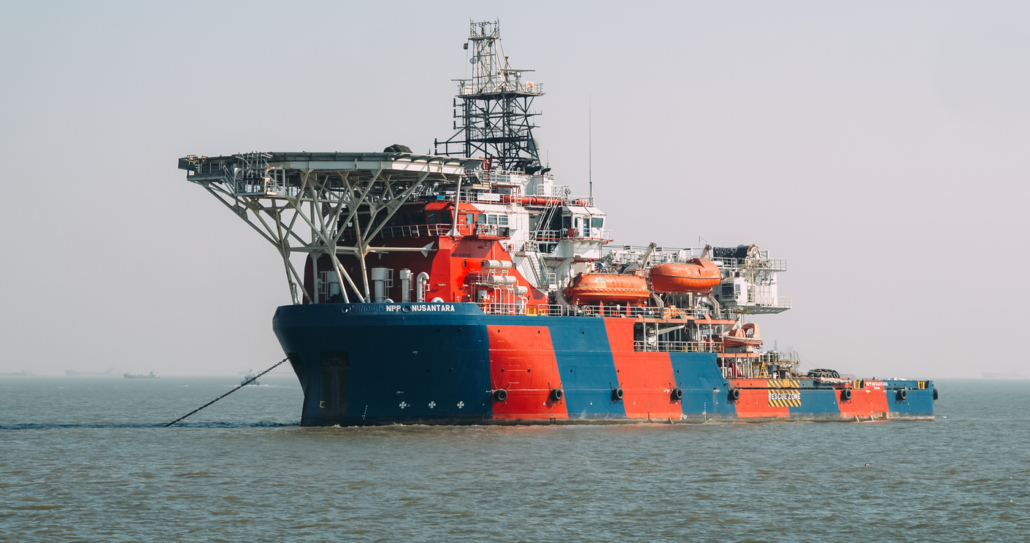
At a Glance: A sat diver (saturation diver) is a commercial diver who lives and works at depth for extended periods, typically 28 days or more, inside pressurized living quarters on a support vessel. This specialized career allows divers to work at greater depths (300 to 1,000+ feet) on projects like underwater construction, pipeline maintenance, and oil rig repairs. Sat divers earn among the highest salaries in the commercial diving industry due to the technical demands and unique challenges of the work.
If you’ve ever wondered what it takes to work hundreds of feet beneath the ocean surface for weeks at a time, saturation diving might be the career path you’re looking for. Unlike recreational divers or even standard commercial divers who return to the surface after each dive, sat divers remain at depth pressure continuously. This approach eliminates the need for repeated decompression and allows them to spend far more time actually working on the ocean floor. It’s demanding, highly technical work that combines physical endurance with specialized training; for many commercial divers, it’s the career they’re building toward.
How Saturation Diving Works
The science behind saturation diving centers on how the human body absorbs inert gases under pressure. When a diver descends, the ambient pressure increases, causing breathing gas (typically a helium-oxygen mixture at these depths) to dissolve into body tissues. The deeper the dive and the longer the exposure, the more gas absorption occurs. At a certain point, the body’s tissues become fully saturated with inert gas and cannot absorb any more, regardless of additional time at depth.
This saturation point is where the technique gets its name. Once a diver reaches saturation exposure, the decompression process required to return safely to atmospheric pressure remains constant whether they’ve been at depth for one day or thirty days. This makes it practical and economical to keep divers at pressure for weeks at a time.
A typical saturation system consists of several interconnected components:
- Living chambers: Pressurized quarters where divers eat, sleep, and rest between work shifts. These living quarters are maintained at the same pressure as the working depth.
- Transfer under pressure (TUP) chambers: Allow divers to move between the living chamber and the diving bell without pressure changes.
- Diving bell (closed bell): Transports divers from the surface vessel to the work site and back while maintaining internal pressure.
- Life support systems: Regulate breathing gas mixtures, remove carbon dioxide, control temperature, and monitor the environment inside all pressurized spaces.
Life support technicians on the surface vessel monitor every aspect of the saturation chamber environment around the clock. They control the partial pressure of oxygen, manage helium and other inert gases in the breathing mixture, and regulate the hot water systems that keep divers warm in cold ocean temperatures.
A Day in the Life of a Sat Diver
Working as a saturation diver means living in a unique environment that few people ever experience. Divers typically work in teams, with shifts rotating so that work continues around the clock on time-sensitive projects. A standard rotation might involve six hours of work followed by rest and recovery time in the living chamber.
The diving bell descends from the support vessel to the work site, where one diver exits to perform tasks while a bellman remains inside monitoring equipment and communications. Work might include underwater welding, pipeline inspection and repair, structural maintenance on offshore platforms, or salvage operations. After completing their shift, divers return to the bell, which is hoisted back to the surface vessel and mated with the saturation system.
Between shifts, sat divers live in surprisingly comfortable conditions considering the circumstances. Modern living chambers include bunks, basic cooking facilities, entertainment systems, and communication links with the surface. The atmosphere inside is warm and humid, and voices take on a distinctive high-pitched quality due to the helium in the breathing gas (sometimes called “chipmunk voice”). Meals are passed through medical locks to maintain pressure integrity.
At the end of a saturation dive, which varies in length but typically lasts four weeks, divers begin the decompression process. This gradual return to surface pressure can take several days, during which divers remain in the hyperbaric chamber as pressure slowly decreases. Rushing this process risks decompression sickness, caused by nitrogen bubbles forming in the blood and tissues as dissolved gases come out of solution too quickly.
Sat Diving vs. Other Commercial Diving Careers
Understanding where saturation diving fits within the broader commercial diving industry helps clarify what makes this specialty distinct. Commercial divers work in various capacities, from shallow inland diving to deep offshore operations.
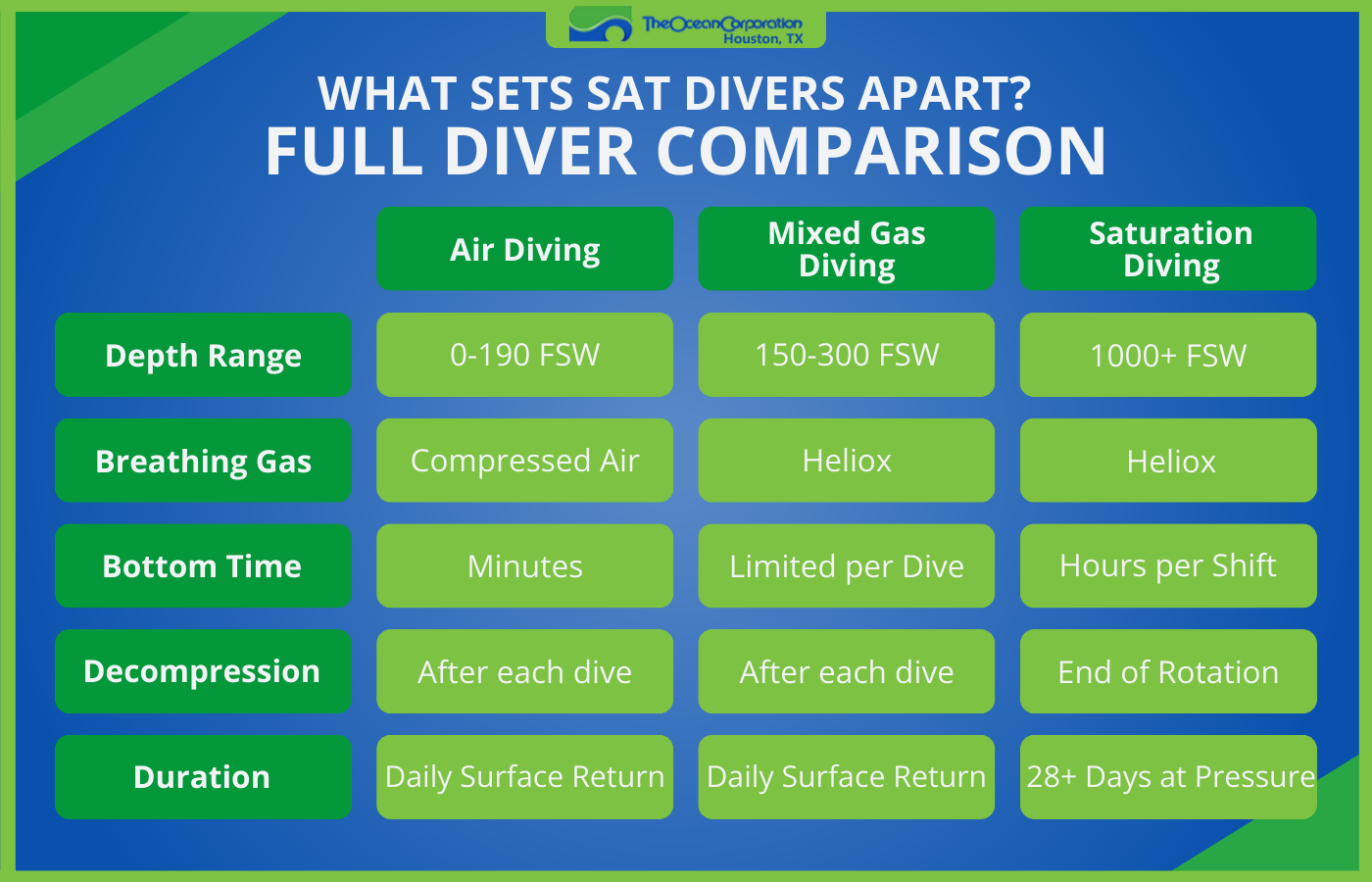
Air divers work at shallower depths using compressed air as their breathing gas. Surface-supplied air diving typically limits work to around 130 to 190 feet, with strict bottom time restrictions. Air divers must decompress after each dive, limiting their productive work time significantly compared to sat divers. They also face risks from nitrogen narcosis at greater depths, which impairs judgment and cognitive function.
Mixed gas divers use helium-oxygen or other specialized breathing gas mixtures to work at intermediate depths, typically between 150 and 300 feet. Like air divers, they decompress after each dive and cannot remain at depth for extended periods.
Saturation divers occupy the deepest tier of commercial diving work. Projects in the Gulf of Mexico, North Sea, and other major offshore regions regularly require sat divers for work below 300 feet. The depth record for commercial saturation diving exceeds 1,000 feet.
The key differentiators for sat diving include:
- Extended bottom time: Hours of productive work per shift versus minutes for bounce divers at similar depths
- Greater depth capability: Access to work sites that surface-supplied divers cannot safely reach
- Specialized equipment: Closed bell systems, saturation chambers, and dedicated support vessels
- Higher compensation: Premium pay reflecting the technical demands and extended time away from home
- Longer project commitments: 28-day saturation periods with subsequent time off
Career Benefits and Opportunities
The financial rewards of saturation diving reflect the specialized skills and demanding conditions involved. Sat divers consistently rank among the highest-paid professionals in the commercial diving industry. Beyond the paycheck, many divers cite the unique nature of the work and the tight-knit community as major draws.
Bryan Nicholls, Vice President of Industrial Diving Operations at Consor and a TOC graduate, describes this sense of belonging:
“Going to school [at The Ocean Corporation], not only did I find a sense of purpose and camaraderie amongst guys and girls that were like me, but in a lot of ways, it provided me with a sense of belonging and a future family—a tribe, if you will—a network of people that no matter where we went within the diving industry or a diving-associated industry, you had this network that you could lean on.”
The offshore diving industry, particularly in the Gulf of Mexico and North Sea, maintains steady demand for qualified sat divers across oil and gas infrastructure maintenance, decommissioning projects, and underwater construction. Pipeline installation, platform maintenance, and subsea equipment repair all require divers capable of working at depths that only saturation diving can practically access.
Career progression often leads from entry-level commercial diving roles through mixed gas diving certification and eventually into saturation work. Experienced sat divers may advance into supervisory positions, become diving superintendents, or transition into related fields like life support technician roles, diving medical technician positions, or company ownership.
How to Become a Sat Diver
The path to becoming a saturation diver begins with foundational commercial diving training. No one starts their career in a saturation chamber. Instead, divers build skills progressively, starting with basic commercial diving certification and advancing through increasingly complex diving modes.
Step 1: Complete commercial diving training. Accredited programs like The Ocean Corporation’s 30-week commercial diving course provide the foundational skills every commercial diver needs to be hired, including diving physics, diving medicine, surface-supplied operations, underwater welding and cutting, rigging, and equipment maintenance. The Ocean Corporation was the first U.S. commercial diving school to include bell diving in its curriculum, giving students direct exposure to the closed-bell operations that lead to saturation work.
Step 2: Gain field experience. Most diving contractors require several years of experience as an air diver or mixed gas diver before advancing to saturation work. This time allows divers to develop judgment, refine technical skills, and demonstrate reliability under demanding conditions.
Step 3: Obtain additional certifications. Sat diving requires specific training and certification beyond basic commercial diving credentials. Many divers pursue IMCA (International Marine Contractors Association) certification for international work opportunities. The Ocean Corporation is the only U.S. school authorized to issue IMCA diving certifications, a credential required for most international saturation diving contracts.
Step 4: Complete company-specific sat training. Diving contractors typically provide additional saturation-specific training before assigning divers to sat projects. This training covers the company’s specific equipment, procedures, and safety protocols.
The career span that successful sat divers can achieve speaks to the long-term viability of this career path. As Nicholls notes:
“It’s something special to continue to work with people that you were in school with during the same year, 20-some years later. They’re more than your friends; they’re your family.”
TOC graduate Doug West started diving school at 39 and went on to log over 7,500 days in saturation over his career — proof that this isn’t a young person’s game, and that the work can sustain a decades-long career.
Physical and Mental Demands
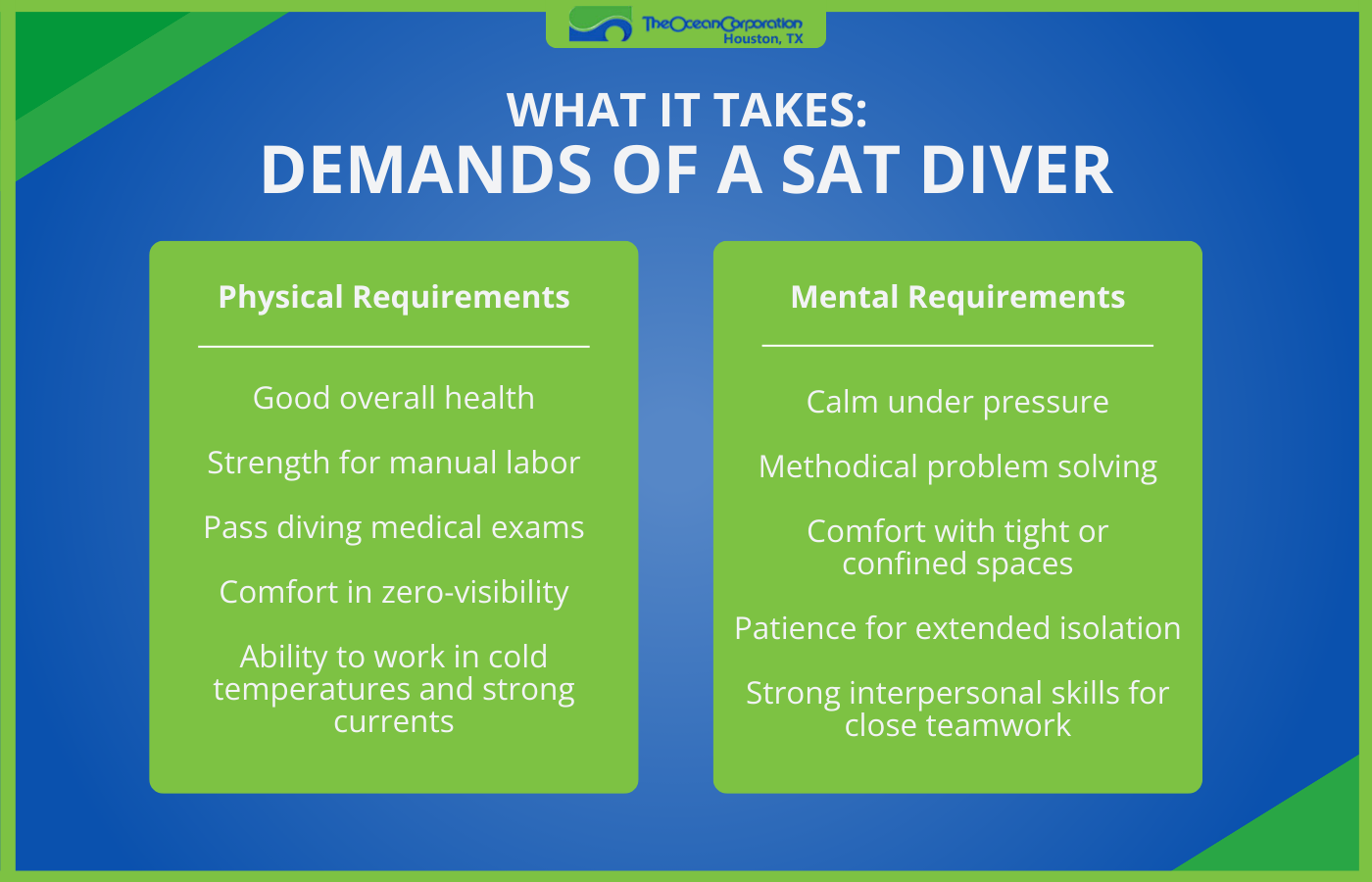
Saturation diving attracts people who thrive on challenge. The work requires physical fitness, mental resilience, and comfort with confined spaces and isolation. Living in a pressurized chamber with the same small team for nearly a month demands patience and interpersonal skills alongside technical competence.
The physical requirements include good overall health, adequate strength for manual labor in challenging conditions, and the ability to pass rigorous diving medical examinations. Divers must be comfortable working in zero-visibility conditions, cold temperatures, and strong currents while managing heavy equipment and performing precise technical tasks.
Mental demands often prove equally challenging. Extended separation from family, the unnatural environment of the saturation chamber, and the inherent risks of deep diving all require psychological stability. Successful sat divers typically share certain traits:
- Calm under pressure
- Methodical in their approach to problems
- Able to function well as part of a close team
Getting Started
For those drawn to the unique challenges and rewards of saturation diving, the journey begins with quality foundational training. The Ocean Corporation has been preparing students for commercial diving careers since 1969, with graduates working throughout the offshore energy, maritime infrastructure, and aerospace industries.
The program is structured around the skills employers actually hire for — 30 weeks of hands-on training, five hours a day. Students train in purpose-built facilities including multiple dive tanks, recompression chambers, and full welding and cutting setups. Financial aid options, including Title IV funding and VA benefits, make training accessible, and the five-hour daily class schedule allows students to work part-time during training.
As TOC graduate Marni Zabarsky puts it:
“Came down here young, broke, you know, no real way to take off if it didn’t work out, but it worked out, and I happened to love it.”
If sat diving is the direction you want to take your career, get in touch with us to learn more about the commercial diving program.
Frequently Asked Questions
How deep do saturation divers go?
Sat divers typically work between 300 and 1,000 feet, with some dives exceeding 1,000 feet. These depths require specialized breathing gas mixtures and closed bell systems.
How long do sat divers stay underwater?
Saturation divers live at depth pressure for typically 28 days per rotation, working shifts from a diving bell, living in a pressurized sat system on the boat. The decompression process at the end takes several days.
How much do saturation divers make?
Sat divers are among the highest-paid in the commercial diving industry. Offshore work in the Gulf of Mexico and North Sea commands premium rates.
What is the difference between a sat diver and other commercial divers?
Air divers return to surface pressure after each dive. Saturation divers live in pressurized chambers for weeks, allowing extended bottom time without repeated decompression.
How do you become a saturation diver?
Start with an accredited commercial diving program, gain several years of field experience, then pursue saturation-specific training and certifications like IMCA credentials.
Is saturation diving dangerous?
Saturation diving requires strict safety protocols and specialized equipment. Life support technicians monitor chamber conditions around the clock to manage risks.
What do sat divers do between shifts?
Divers rest in pressurized living chambers with bunks, cooking facilities, and entertainment while maintaining the same ambient pressure as the working depth.
Where do saturation divers work?
Sat divers work offshore worldwide, particularly in the Gulf of Mexico and North Sea, on pipeline repairs, oil rig maintenance, and underwater construction projects.
About The Ocean Corporation
The Ocean Corporation has trained commercial divers and NDT technicians since 1969. Graduates work across offshore energy, ship repair, maritime infrastructure, and aerospace. We’re the only U.S. institution authorized to issue IMCA international diving certifications, and career services support is available to graduates for life.
Students who qualify may access GI Bill benefits, Title IV federal financial aid, and state grants. Our campus sits in Houston, Texas, positioned at the center of the Gulf Coast industrial corridor.
Compliance Note
Earnings depend on employer, location, qualifications, and project type. Program length, curriculum, and outcomes may change. Career placement services support graduates in their job search but do not guarantee employment or specific salary outcomes.

