
How to Get Into a Trade: Your Guide to Getting Started and Advancing Your Career
At a Glance: Getting into a trade typically requires a high school diploma or GED, hands-on training through a trade school or apprenticeship, and a willingness to show up and work. Training timelines vary, but most programs run two years or less. Commercial diving and NDT programs at The Ocean Corporation take about 30 weeks. Physical capability matters for most trades, though specific requirements depend on the field. With skilled workers retiring faster than new ones enter the workforce, employers are actively hiring across construction, energy, inspection, and maritime industries.
If you’ve ever felt like the traditional college route isn’t for you, you’re not alone. Millions of people across the United States are finding that trade careers get them to stable, well-paying work faster than a four-year degree, without sitting in lecture halls or accumulating massive student debt. The skilled trades are experiencing a serious labor shortage, and employers are actively looking for qualified workers. This guide covers the basic requirements, the types of careers available, and how to advance once you’re in.
What Exactly Is a Trade Job?
A trade job is skilled work that requires specialized training rather than a traditional college degree. Think electricians, plumbers, welders, HVAC technicians, and commercial divers. These are hands-on careers that build and maintain the infrastructure people depend on every day, from the buildings we live in to the bridges we drive across to the energy infrastructure that powers our daily lives.
Trade jobs differ from other careers in a few important ways:
- They prioritize practical skills over academic theory
- Training is typically shorter and more focused than a four-year college program
- Many trades offer apprenticeship programs where you earn while you learn
- Certifications and licenses often matter more than degrees
- Work environments are varied and often physical rather than desk-bound
The skilled trades are getting renewed attention as more people recognize that work experience and technical certifications can take you further than a four-year degree in a lot of fields.
Why Consider a Career in the Trades?
The numbers tell a compelling story. According to the Bureau of Labor Statistics, many trade careers offer median salaries that compete with or exceed those of jobs requiring a bachelor’s degree. And because you’re entering the workforce years earlier than your peers who chose the four-year college route, your lifetime earning potential can actually be higher.
Beyond the financial benefits, trade careers offer something that’s harder to quantify. At the end of each day, you can see what you’ve built, fixed, or inspected. That kind of tangible result keeps people in the trades for decades.
Here’s what makes trade careers particularly attractive right now:
- High demand: Skilled tradespeople are retiring faster than new workers are entering the field, creating a significant labor shortage across nearly every trade
- Job security: Infrastructure always needs maintenance, inspection, and repair, regardless of economic conditions
- Geographic flexibility: Trade skills are transferable, whether you want to work locally or travel across the country (or even internationally)
- Entrepreneurship potential: Many tradespeople eventually start their own business and become their own boss
- No student debt trap: Trade school and apprenticeship programs cost a fraction of traditional college
“I make more or just as much as a person that went the four-year degree path. Going to vocational school didn’t limit me financially.” — Jake Kelley, Project Coordinator at QuarterNorth Energy
Basic Requirements for Getting Into a Trade
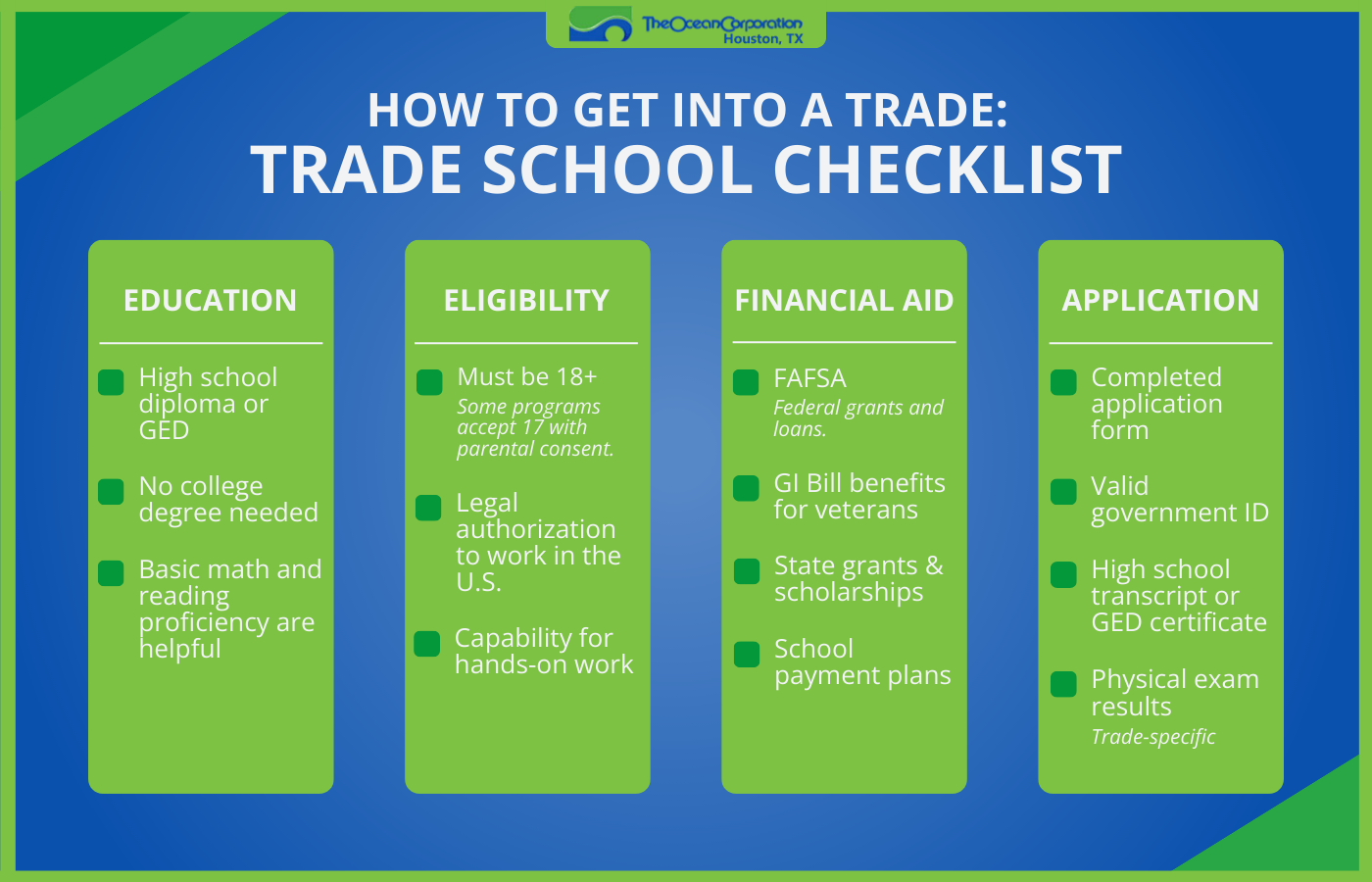
The admission process for most trade careers is refreshingly straightforward. Unlike the competitive scramble for four-year college acceptance, getting into a trade typically requires:
Educational foundation: Most trade programs require a high school diploma or GED. Some may ask for basic math and reading proficiency, but you won’t need advanced coursework to get started. If you’re a high school student exploring your options, focusing on shop classes, physics, and math will give you a helpful foundation.
Physical capability: Many trades involve physical work, so you’ll need to be in reasonable health. Specific requirements vary by trade. A commercial diver, for example, needs to pass a dive physical, while an NDT technician might simply need the ability to climb ladders and work in confined spaces.
Willingness to learn: The biggest requirement is harder to measure. Trade careers reward people who show up ready to work, ask questions, and keep getting better at what they do. Hiring managers in the trades consistently say they’d rather train someone with the right attitude than deal with someone who thinks they already know everything.
Age requirement: Most trade programs and apprenticeships require you to be at least 18 years old, though some accept applicants at 17 with parental consent.
Pathways Into the Trades
There’s no single path into a trade career. The right choice depends on how you learn best, what you can afford, and how quickly you want to start working.
Trade School or Technical College
Vocational degree programs at trade schools and technical colleges offer focused, hands-on training that prepares you for specific careers. Programs typically range from several months to two years, depending on the trade. This route gives you concentrated instruction from industry professionals and often includes job placement assistance.
The advantage of trade school is efficiency. You’re not taking general education courses that have nothing to do with your career goals. Every class connects directly to the skills you’ll use on the job.
Apprenticeship Programs
A trade apprenticeship combines paid work experience with classroom instruction. You’ll work alongside experienced tradespeople, learning the craft while earning a paycheck. Apprenticeships typically last between one and five years, depending on the trade.
This path appeals to people who learn best by doing and who need to earn income while training. The downside is that apprenticeships can be competitive to get into, and your learning pace depends partly on the work your employer has available.
Community College
Many community colleges offer trade programs at lower costs than dedicated trade schools. These programs often provide a broader education while still focusing on practical skills. This route might take longer but can be a good option if you’re unsure which specific trade you want to pursue.
Military Training
Veterans often have a head start in the trades. Military training frequently includes technical skills that translate directly to civilian trade careers. Additionally, GI Bill benefits can cover trade school tuition, making this an attractive option for those transitioning out of service.
Types of Trades to Consider
The world of skilled trades is more diverse than most people realize. Here are some categories worth exploring:
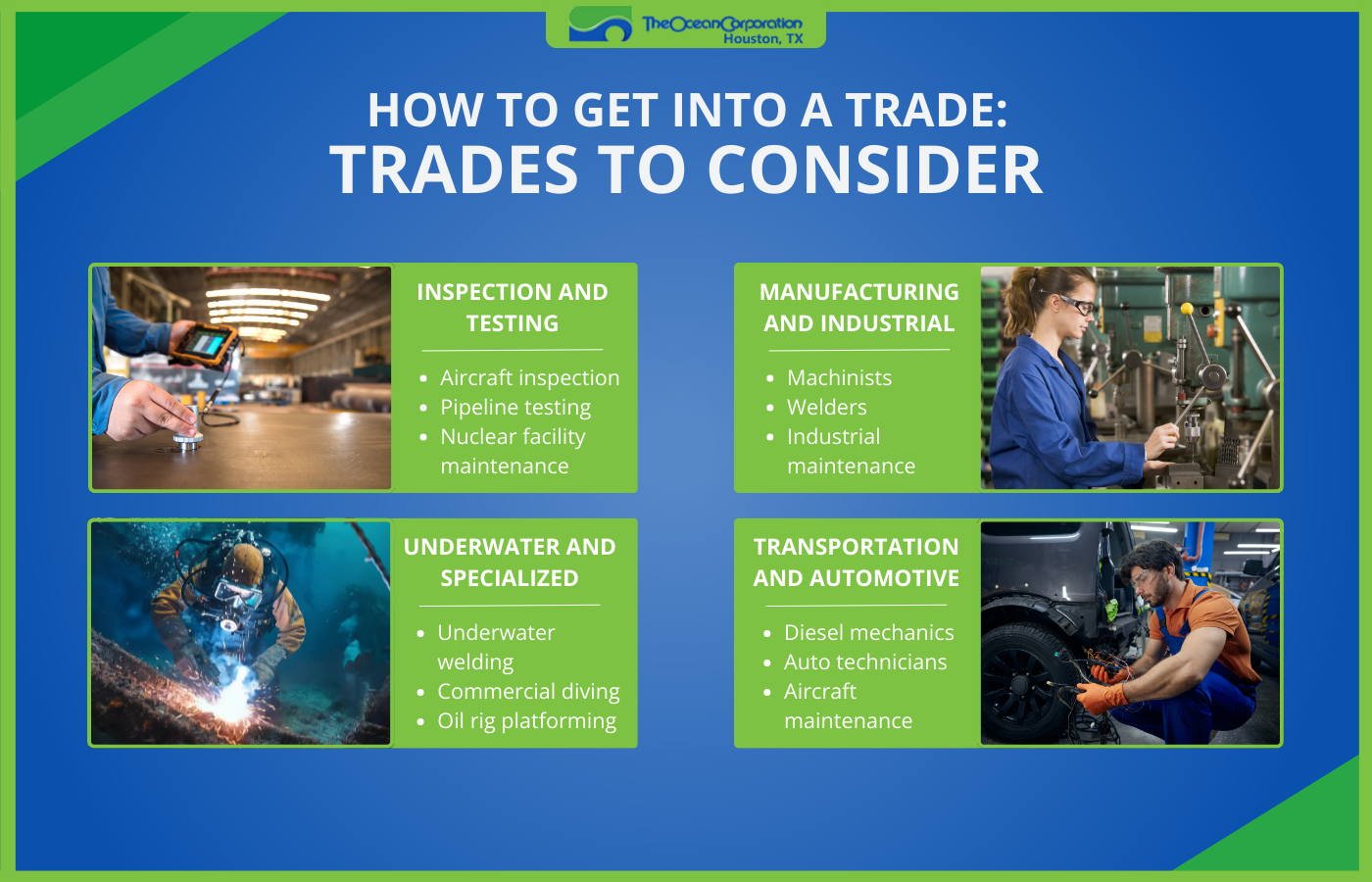
Construction Trades: Electricians, plumbers, carpenters, HVAC technicians, and masons build and maintain the structures we live and work in. These trades offer strong job stability because buildings always need construction, renovation, and repair.
Manufacturing and Industrial Trades: Machinists, welders, and industrial maintenance technicians keep factories and production facilities running. As manufacturing continues to evolve with new technologies, these roles are becoming increasingly sophisticated.
Transportation and Automotive: Diesel mechanics, auto technicians, and aircraft maintenance specialists keep vehicles moving. With the rise of electric vehicles and advanced automotive systems, mechanic jobs now require more technical knowledge than ever.
Inspection and Testing Careers: Nondestructive testing (NDT) is one of the trades most people haven’t heard of, which is part of why demand for technicians stays so high. NDT technicians inspect critical infrastructure like aircraft components, pipelines, and nuclear facilities without damaging the materials they’re testing. The work combines technical precision with variety. You might work in aerospace one month and energy production the next. NDT certifications follow a tiered system from Level I through Level III, and each level opens up higher pay and more responsibility.
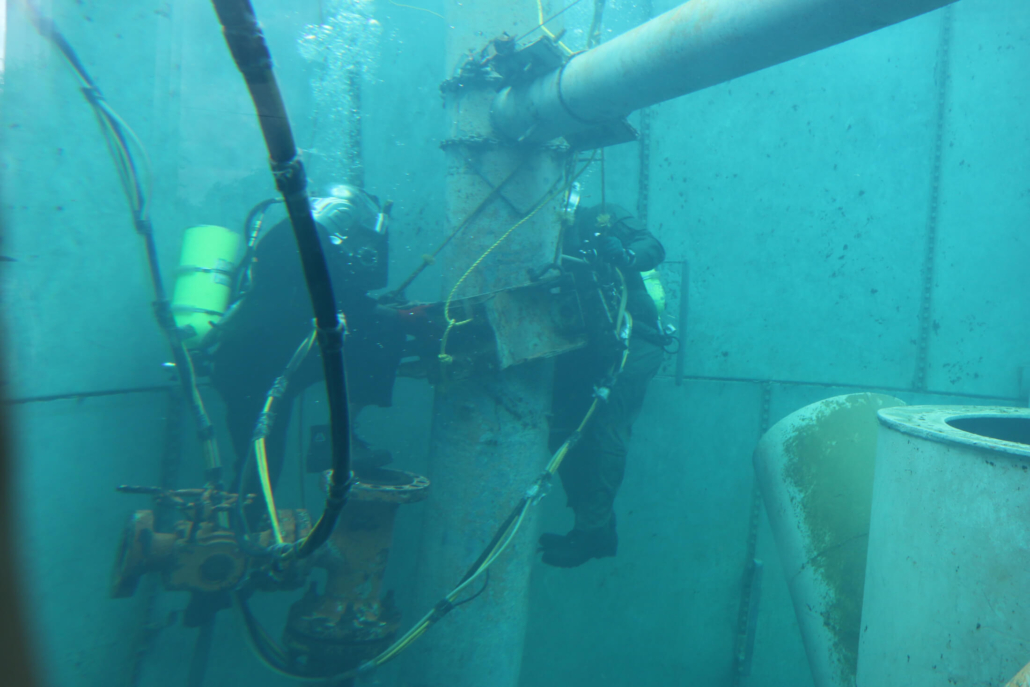
Underwater and Specialized Trades: Commercial diving is unlike any other trade career. Commercial divers perform underwater welding, inspection, construction, and repair work on everything from offshore oil platforms to ship hulls to underwater pipelines. The work is physically demanding and mentally challenging, but it comes with strong pay and a tight-knit professional community that many divers describe as a second family. If sitting at a desk was never going to work for you, commercial diving is worth a serious look.
“It’s really changed my life. University and college wasn’t for me, and it’s not a thing for a lot of people. Knowing there’s trade programs that require skilled talent, they’re highly understaffed these days.” — Brian O’Leary, NDT Program Manager at Gecko Robotics
How to Advance Your Trade Career
Getting into a trade is just the beginning. The skilled trades offer clear pathways for advancement that reward experience, additional certifications, and leadership ability.
Build Your Foundation
Your first few years should focus on mastering the fundamentals and gaining diverse work experience. Take on different types of projects when possible. The broader your skill set, the more valuable you become.
Pursue Additional Certifications
Most trades have tiered certification systems. An NDT technician, for example, can progress from Level I to Level II to Level III, with each level bringing more responsibility and higher pay. Investing in additional certifications demonstrates commitment and opens doors to specialized roles.
Develop Leadership Skills
As you gain experience, opportunities to supervise others will emerge. Foremen, supervisors, and project managers earn more and have more control over their work. These roles require not just technical competence but also the ability to communicate, plan, and lead teams.
Consider Specialization
Within every trade, certain specializations command premium pay. In commercial diving, saturation divers who live at pressure and work at extreme depths for weeks at a time can earn several times what surface-supplied divers make. In NDT, technicians certified in multiple testing methods have more job opportunities than those with single-method certification.
Start Your Own Business
Many tradespeople eventually launch their own small business. With experience, industry connections, and a reputation for quality work, you can transition from employee to business owner. This path offers the highest earning potential and the ability to choose your projects, your crew, and your schedule.

Take the First Step with Ocean Corp
The Ocean Corporation has been training commercial divers and NDT technicians since 1969. Our 30-week programs run five hours a day, and most students work part-time while enrolled. Graduates earn internationally recognized certifications, including IMCA credentials for diving that open doors to work overseas. And our career placement team supports graduates for life, not just at graduation.
Financial aid is available for qualified students, including Title IV federal student aid, GI Bill benefits, and state grants. If cost is a concern, our financial aid team can walk you through your options before you commit to anything.
If you’re ready to get into a trade that’s actually hiring, talk to our admissions team. That’s the first step.
Frequently Asked Questions
How long does it take to get into a trade?
Training timelines vary by trade and pathway. Trade school programs can range from about 30 weeks to two years. Apprenticeships typically last one to five years but provide paid work experience during training. Some trades allow you to start working in entry-level positions while pursuing additional certifications.
Do I need to be good at math to work in a trade?
Basic math skills are helpful for most trades, but you don’t need advanced mathematics. Trades like electrical work and NDT require more calculation than others, but trade programs teach you the specific math you’ll need for your field.
What’s the average salary for trade workers?
Salaries vary significantly by trade, location, experience, and specialization. Many skilled tradespeople earn between $50,000 and $80,000 annually, with specialized roles and supervisory positions often exceeding six figures. The Bureau of Labor Statistics provides current median wage data for specific trades.
Am I too old to start a trade career?
No. Many people enter the trades in their 30s, 40s, and beyond. Trade programs frequently include career changers, veterans, and people seeking more fulfilling work after years in other industries. Physical fitness matters more than age for most trades.
Is trade work stable, or will I be laid off frequently?
Job stability varies by trade and region. Generally, trades tied to maintenance and inspection (like NDT) offer more consistent work than those tied to new construction. Building a reputation for quality work and developing relationships with multiple employers helps smooth out any gaps between projects.
Can I work in a trade with a criminal record?
Policies vary by employer and sometimes by the specific work site. Some industries (like nuclear or government facilities) have stricter background requirements. Being upfront about your history and demonstrating reliability can help overcome past mistakes in many cases.
What’s the difference between trade school and an apprenticeship?
Trade school provides concentrated classroom and hands-on training, typically without pay, in a shorter timeframe. Apprenticeships combine paid on-the-job training with classroom instruction over a longer period. Both can lead to successful careers, and the right choice depends on your financial situation and learning preferences.
About The Ocean Corporation
Since 1969, The Ocean Corporation has trained thousands of commercial divers and NDT technicians who now work across offshore energy, maritime construction, aerospace, and industrial inspection. As the only U.S. school offering internationally recognized IMCA diving certifications, our graduates find opportunities both domestically and abroad. Our 30-week programs run five hours daily, allowing students to work part-time during training.
Qualified students may use GI Bill benefits, Title IV federal financial aid, and state grants. Located in Houston, Texas, our students train minutes from the companies that hire them.
Compliance Note
Earnings depend on employer, location, qualifications, and project type. Program length, curriculum, and outcomes may change. Career placement services support graduates in their job search but do not guarantee employment or specific salary outcomes.

