
Class Schedule
Classes meet Monday through Friday for five hours a day: 7:30 am to 12:30 pm, 1:00 pm to 6:00 pm, or 6:00 pm to 11:00 pm. The five-hour schedule leaves room for part-time work during training.

Nondestructive inspection methods are the techniques a technician uses to evaluate a material, component, or weld without cutting, breaking, or damaging it. Destructive testing tells you about a part by ruining it. Nondestructive testing tells you about the same part while it stays in service. That distinction is why NDT sits at the center of quality control in aerospace, oil and gas, power generation, manufacturing, and infrastructure. An NDT technician finds the cracks, corrosion, and weld flaws the naked eye cannot detect.
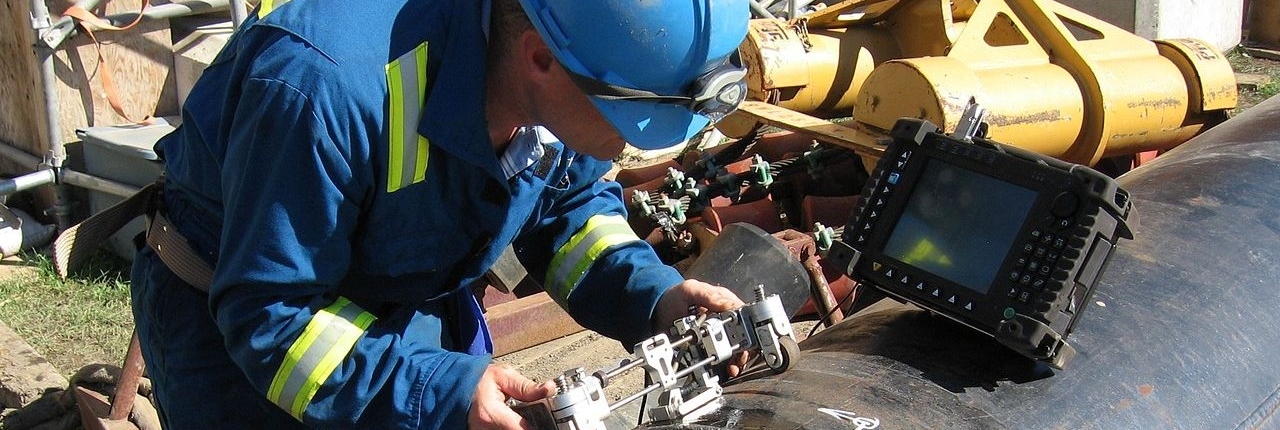
At The Ocean Corporation, Core NDT Training is the foundation of our 30-week NDT certification program. Students train on eight NDT methods in accordance with ASNT Recommended Practice SNT-TC-1A: the six long-established methods most employers require, taught at Level I and Level II, plus ground penetrating radar and infrared thermography at Level I. The training is hands-on. Students run real inspections on metal parts, welds, and concrete using the equipment they will carry into the field, so the first day on a job site is not the first day doing the work.
This is precise, methodical work. It rewards people who like solving problems, want accurate results they can stand behind, and want a career where their findings protect lives and equipment.
Core NDT Training is built into The Ocean Corporation’s 30-week Nondestructive Testing Certification program at our Houston campus. The core modules cover eight inspection methods, and the program then adds specialized training in 40-hour radiation safety, remote inspection, positive material identification, and HAZWOPER, along with materials and processes, basic welding, and report writing.
Coursework pairs classroom theory with supervised practice in our NDT Lab. Students learn how each method works, where it applies, and how to interpret and document what they find.
Classes meet Monday through Friday for five hours a day: 7:30 am to 12:30 pm, 1:00 pm to 6:00 pm, or 6:00 pm to 11:00 pm. The five-hour schedule leaves room for part-time work during training.
New classes begin every five weeks.
Industrial equipment fails from the inside out. A hairline crack in a weld, thinning in a pipe wall, or corrosion under a coating can sit invisible for years before it causes a catastrophic failure. NDT inspection finds those problems while they are still small, when the fix is a repair order instead of a shutdown or an injury. Owners rely on NDT to control maintenance costs the same way they rely on it for safety: a defect caught early is always cheaper than a failure.
Much of this work is required by code, which is what makes the demand steady. Under API Standard 653, an aboveground storage tank gets a formal external inspection by a certified inspector at least every five years and an internal inspection on a schedule that starts at ten years and adjusts with measured corrosion rates. Similar rules govern pressure vessels, pipelines, and aircraft components. Inspections come back around on a regular interval for as long as equipment stays in service, and every one of those inspections needs a qualified technician.
That recurring, code-driven demand makes nondestructive testing one of the most dependable skilled trades in the country. The manufacturing process that builds a component and the decades of service that follow both depend on people who can verify material properties without taking anything apart.
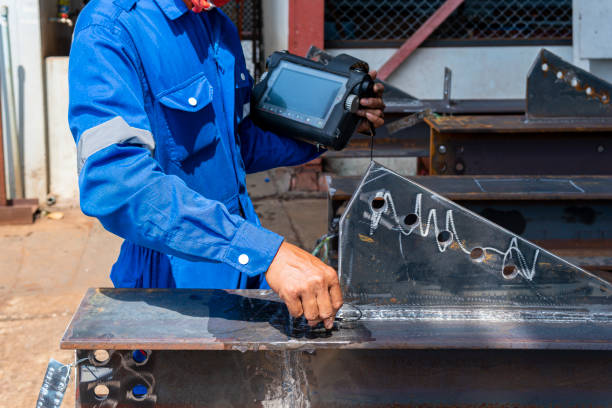
The general title for someone who runs inspections across multiple methods, entering the field at Level I and testing up to Level II. Technicians work for third-party inspection companies, in-house quality departments, and contractors serving refineries and plants.

QC inspectors verify that parts and materials meet specifications before they ship or go into service, combining inspection methods with materials knowledge and written documentation. Report writing, procedure writing, and positive material identification all feed directly into this role.

Welds get inspected with visual, penetrant, magnetic particle, and ultrasonic methods before a structure goes into service. Training in MIG, TIG, and stick processes teaches how welds fail, which is what makes a technician good at finding porosity, cracks, and deformities.

Pipeline inspection covers girth welds on new construction and corrosion checks on lines already in the ground. Isometric drawing interpretation and HAZWOPER training both apply here, and the work often pays a per diem on top of the hourly rate.

Aircraft components are inspected on a set schedule for their entire service life, with eddy current and penetrant testing catching fatigue cracks before they spread. Airlines, repair stations, and manufacturers keep inspectors on staff year-round. Aerospace employers certify inspectors under NAS 410, and the program’s training hours are aligned to it.
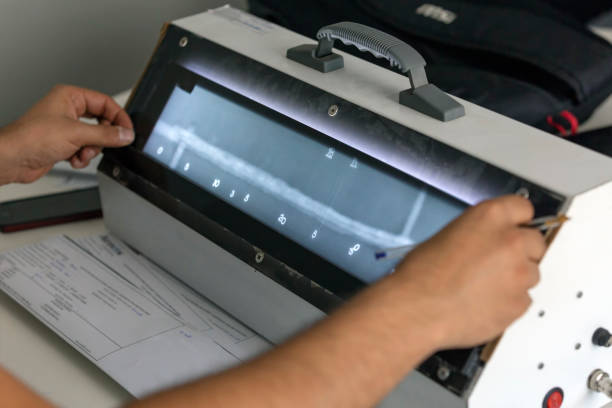
Radiographers use X-ray and gamma sources to image the inside of welds and castings. The role requires the 40-hour radiation safety training that comes with the program, and it often runs on night shifts when a facility is clear of other crews.
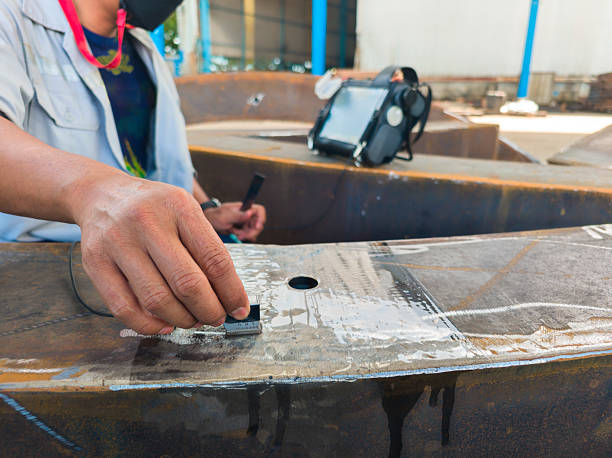
Ultrasonic work measures wall thickness, maps corrosion, and finds subsurface flaws in welds, plate, and piping. Level II training covers flaw sizing, characterization, and calibration, which is the skill set that separates a scanner from an interpreter.
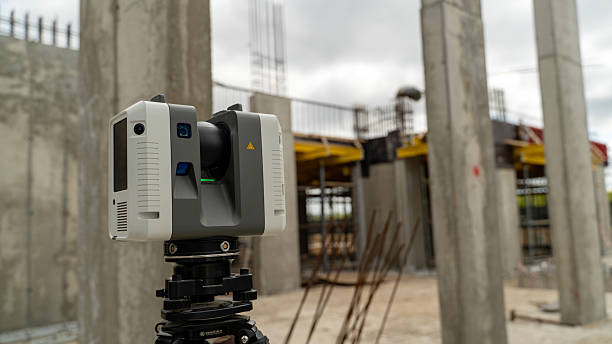
Before a contractor cuts, cores, or drills into a slab, someone has to know what is inside it. Concrete scanning technicians use ground penetrating radar to locate rebar, post-tension cables, conduit, and buried utilities, and to evaluate bridge decks and parking structures. The work serves commercial construction, utility, and engineering firms.

Thermographers run infrared surveys of switchgear, electrical panels, motors, and building envelopes, usually as part of a plant’s predictive maintenance program. Since 2023, NFPA 70B has been an enforceable standard rather than a recommended practice, and it calls for periodic infrared inspection of energized electrical equipment.

Drones and ROVs put inspectors into places people cannot reach safely, including tank interiors, flare stacks, and confined spaces. Remote inspection training is built into the program, and it is one of the faster growing corners of the field.
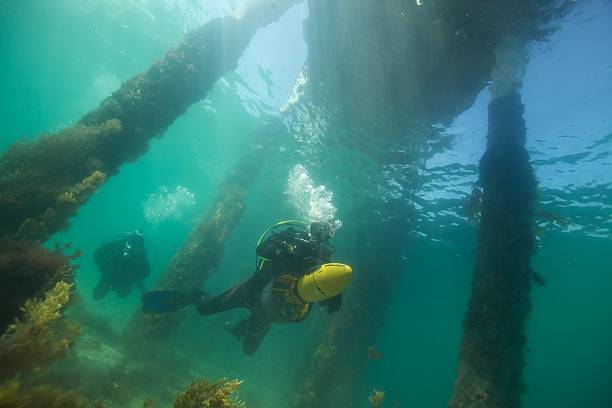
Divers trained in inspection perform NDT on offshore platforms, pipelines, bridge piers, and dams. This path pairs the NDT program with commercial diver certification, and The Ocean Corporation is one of the few schools that trains both.

Refineries, pipelines, and tank farms run continuous inspection programs on welds, piping, and storage tank floors and shells, and Houston sits in the middle of the Gulf Coast industrial corridor.

Aircraft components are inspected throughout their service life, with eddy current, penetrant, and ultrasonic methods catching fatigue cracks early.

Plants of every type, including nuclear facilities, depend on scheduled NDT to verify boilers, turbines, piping, and welds on infrared surveys to catch electrical faults before they cause an outage.

Fabricators apply NDT in quality control, checking castings, forgings, and welds before products ship.

Contractors and engineering firms use ground penetrating radar to scan concrete before cutting and coring and to evaluate slabs, decks, and parking structures.

Bridges, dams, and marine structures carry inspection requirements of their own, from GPR surveys of bridge decks to underwater NDT work performed by dive teams.
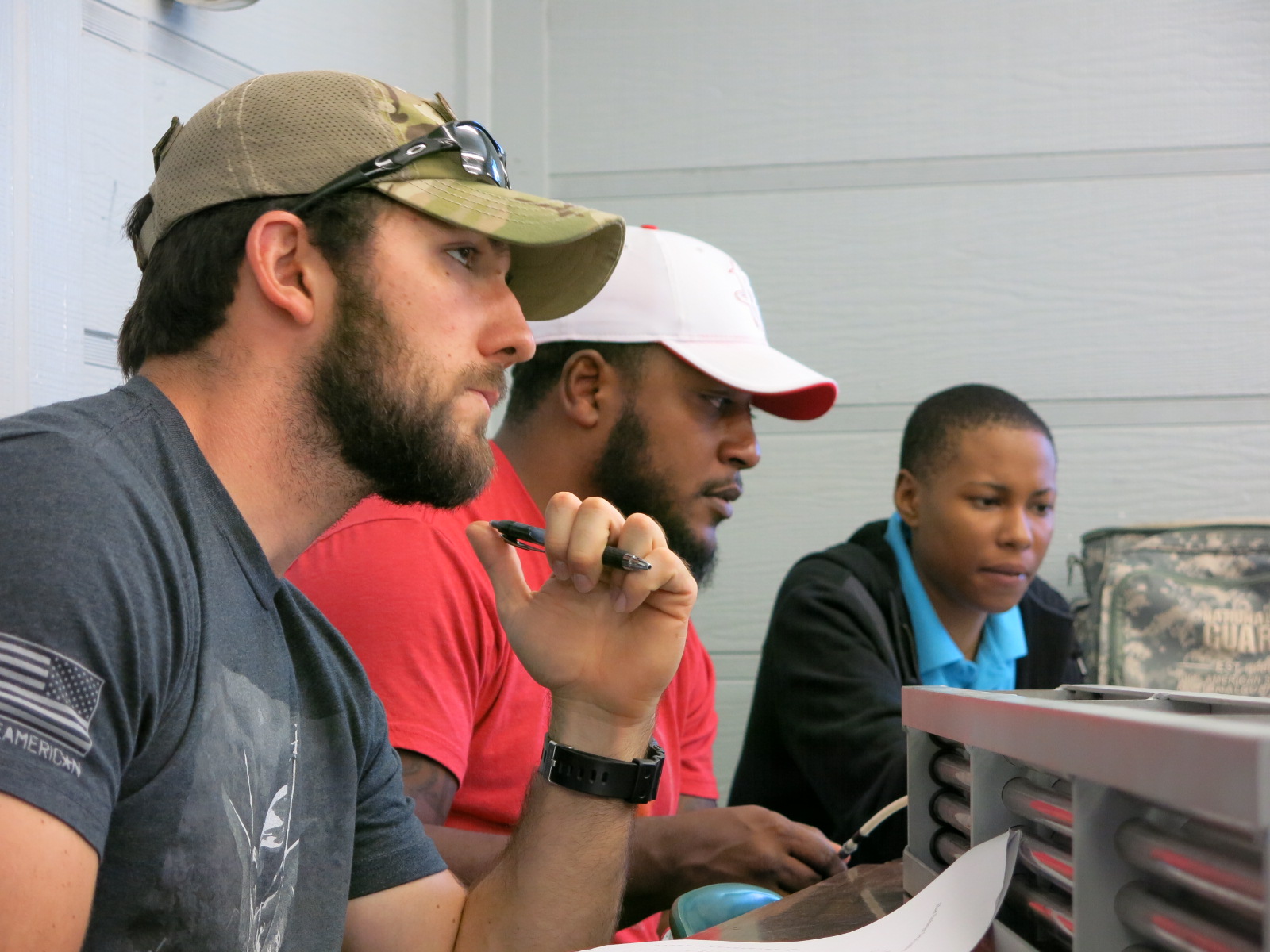
Many technicians spend years collecting certifications one method at a time on the job. Ocean Corp graduates leave with training across eight methods at once, giving them broader career flexibility.

Inspection intervals written into industry and federal standards bring equipment back around on a regular schedule, year after year, which makes NDT a stable trade.
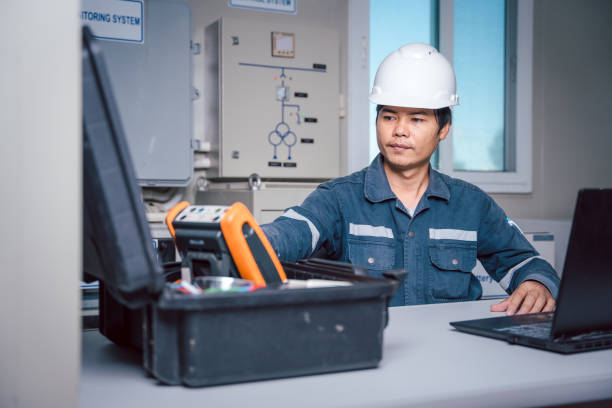
Georgetown University’s Center on Education and the Workforce (2022) ranks The Ocean Corporation 9th nationwide for 10-year earnings net present value and 107th for 40-year value among all post-secondary institutions in the United States.
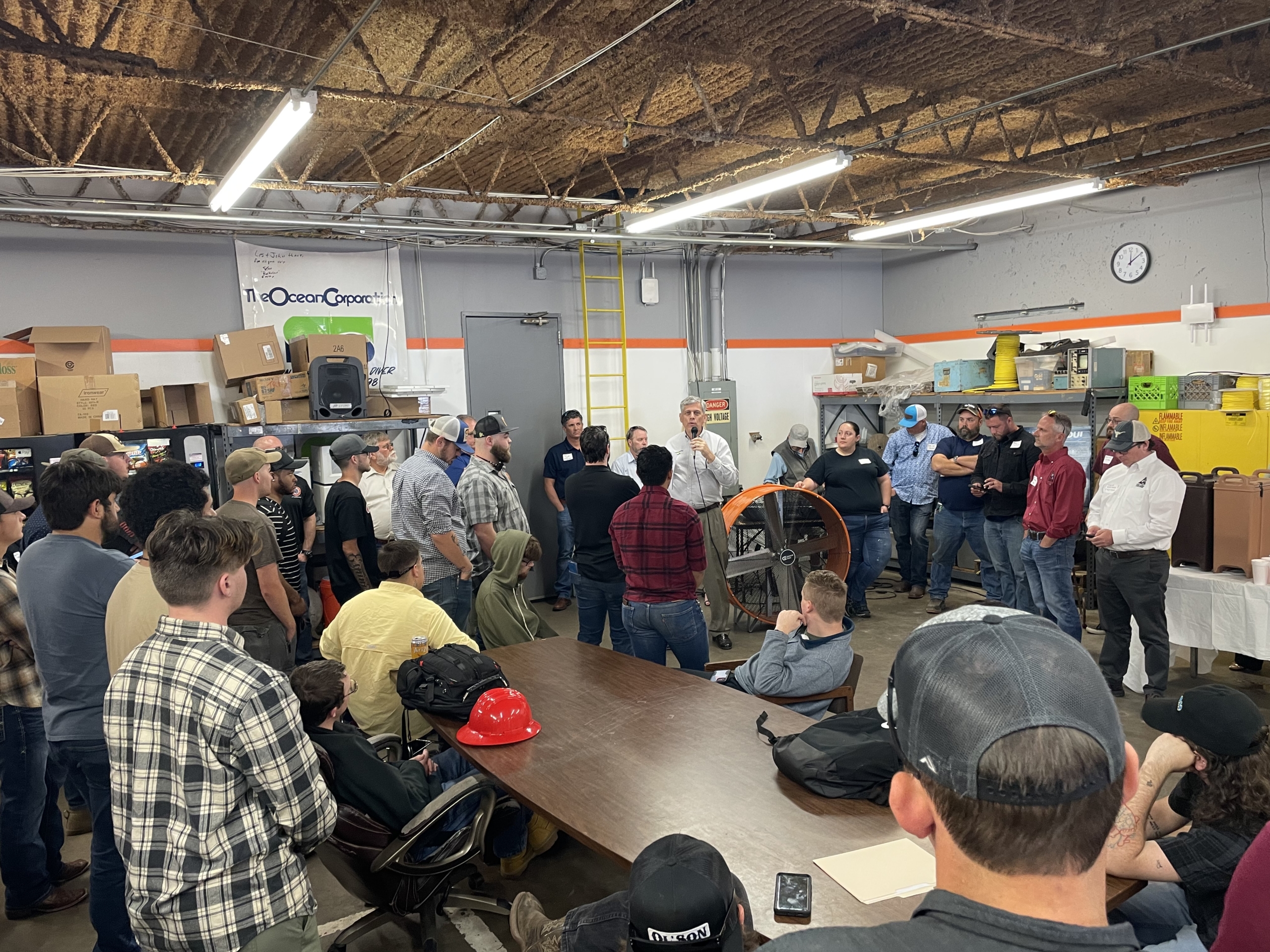
NDT graduates receive career placement support for life, free refresher courses, and continuing education discounts. The network of more than 15,000 alumni is a working career asset, and many graduates find themselves working with or under other Ocean Corp alumni.
Discover available grants, scholarships, loans, and flexible payment plans tailored to support your education.
Find step-by-step guidance on the application process, tools for estimating aid, and resources to answer any funding-related queries.
What are nondestructive inspection methods?
Nondestructive inspection methods are techniques used to evaluate materials, welds, and components without damaging them. This program trains eight: visual, liquid penetrant, magnetic particle, ultrasonic, radiographic, and eddy current testing, plus ground penetrating radar and infrared thermography. Together they form the toolkit an NDT technician uses across industries.
How is nondestructive testing different from destructive testing?
Destructive testing evaluates a material by pushing a sample to failure, which destroys the part being tested. Nondestructive testing evaluates the actual component that will go into service. Only NDT can be applied to equipment already in operation.
Are there other NDT methods beyond the eight taught here?
Yes. Industry also uses acoustic emission, leak testing, magnetic flux leakage, and other techniques for specific applications. The six long-established methods in this program are the ones most employers require, and GPR and infrared thermography extend a graduate into construction, utility, and predictive maintenance work.
What certifications does Core NDT Training prepare me for?
Students receive training in eight methods in accordance with ASNT Recommended Practice SNT-TC-1A: Level I and Level II in seven methods, including ground penetrating radar, and Level I in infrared thermography. Employers certify technicians under their own written practice, and graduates arrive with the documented training hours that certification requires.
Do I need prior experience to enroll?
No. The program is designed for students new to the field. Many NDT students come to us after high school, after the military, or as a mid-career change. Talk to our admissions team about where to start.
How long does the training take, and when can I start?
Core NDT Training is part of the 30-week Nondestructive Testing Certification program. Classes meet five hours a day, Monday through Friday, and new classes begin every five weeks. Enroll here when you are ready.
How does The Ocean Corporation support job placement?
Lifetime career placement support is included for every graduate. Our career services team connects graduates with inspection employers, supports interview and resume preparation, and stays available throughout a graduate’s career.